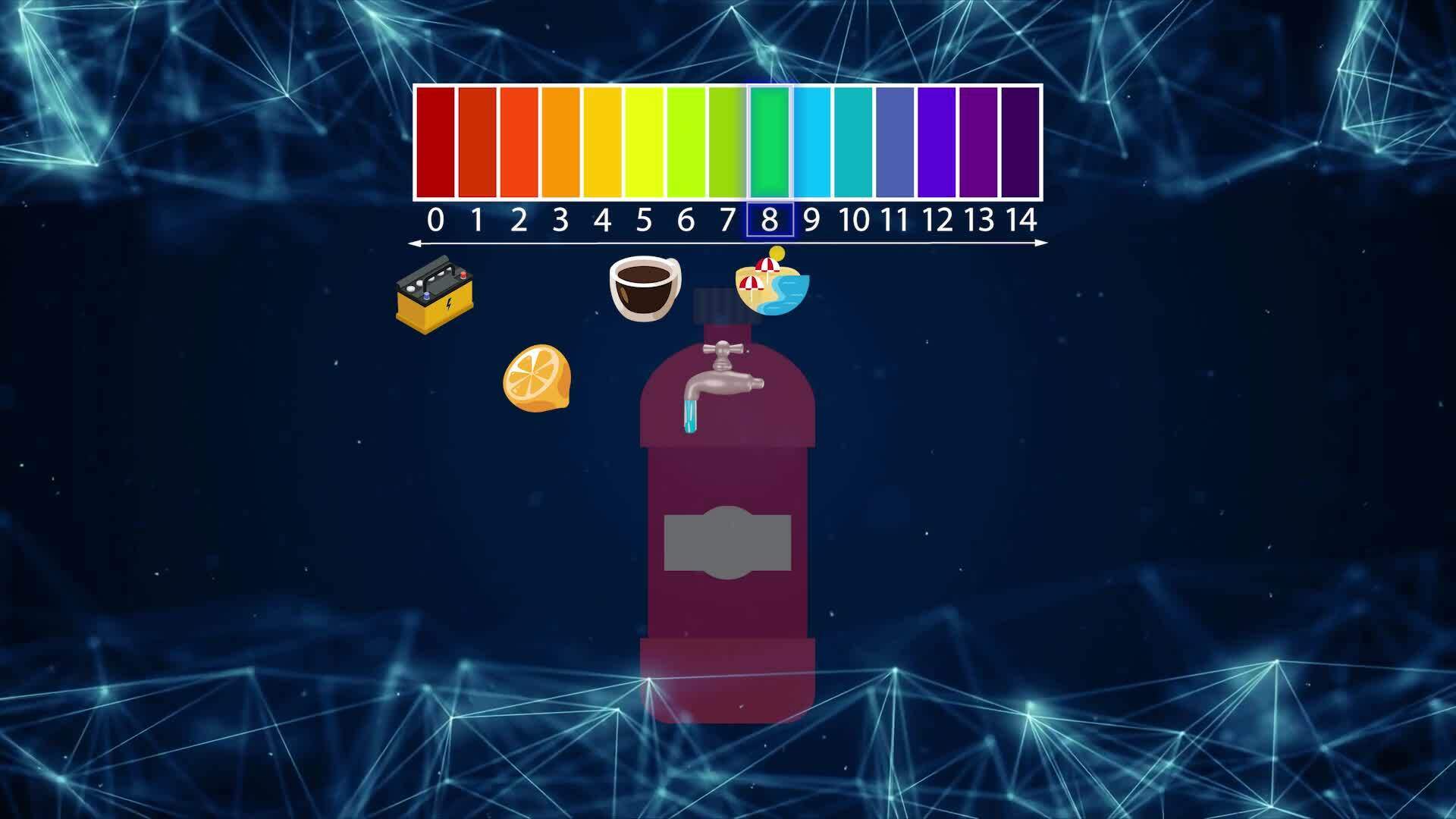
Just thinking about eating a lemon can make your mouth water. Acidity is a common flavour in lots of foods and it comes from various types of acids. The number of free hydrogen ions determines how acidic a solution is. The opposite of an acid is called a base. Bases contain hydroxide ions - which easily absorb hydrogen ions. If an equal amount of hydrogen ions from an acid and hydroxide ions from a base react with each other, water and a type of salt are formed. It is called neutralisation. Both acids and bases are corrosive. In this film you will get to know more about acids and bases. You will learn how the pH scale is used to measure acidity and alkalinity and that a low value is acidic, a high number is basic, and pH 7 is neutral. Finally you will learn how the knowledge about acids and bases have helped improving the environment from the effects of acid rain.
- Acids
- Bases
- Hydrochloric acid
- Hydroxides
- Nitric acid
- Sulfuric acid