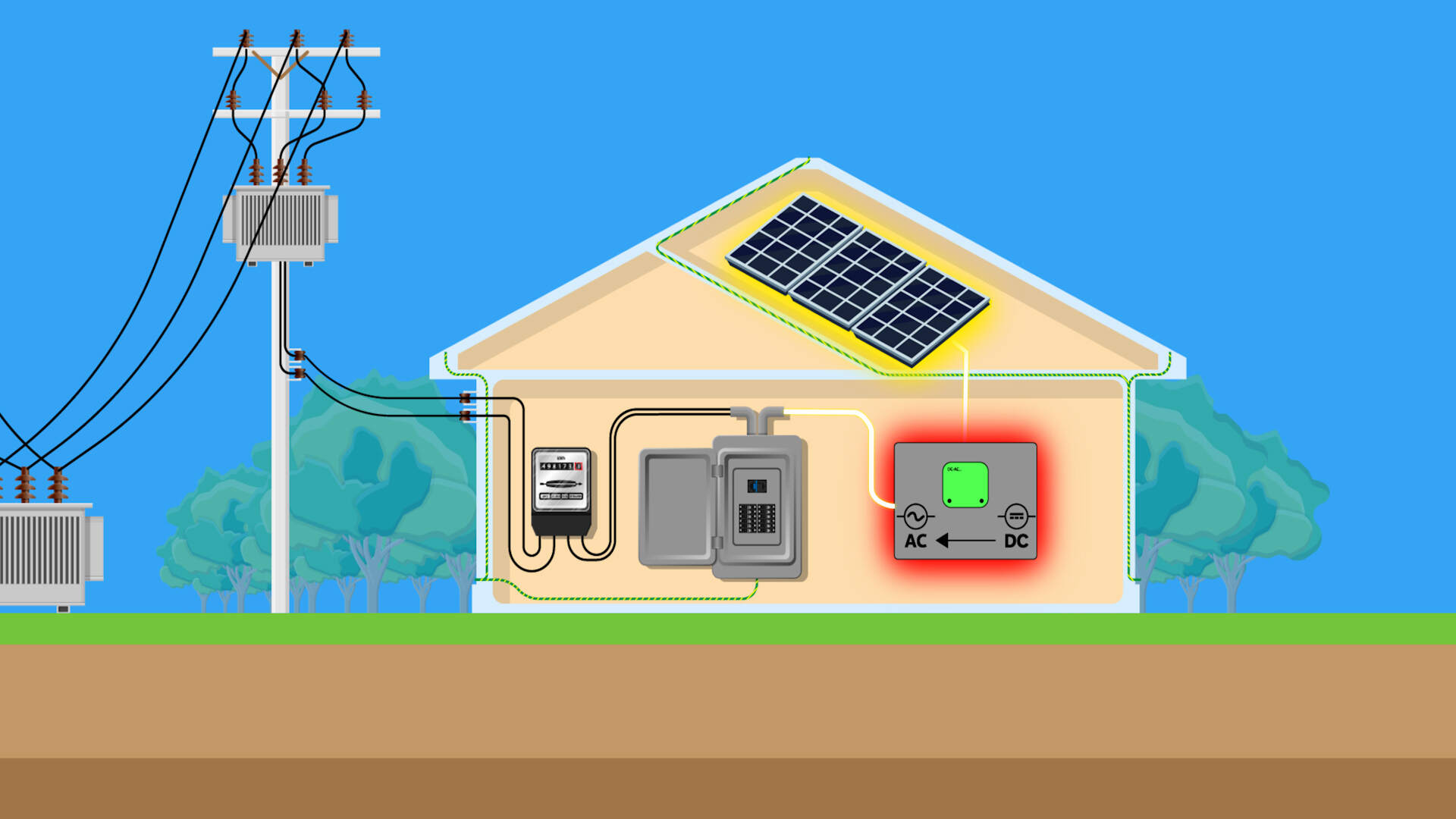
Electric current consists of electrons moving through a conductor and exists in two main types: direct current and alternating current. Direct current (DC) means that the electrons move in the same direction at all times, which is the type of electricity found in batteries, solar cells, and most electronic devices. Alternating current (AC), on the other hand, means that the electrons rapidly change direction back and forth. Alternating current is used in our power grid and wall outlets since it is the most efficient way to transport energy over long distances. Despite this, many of our everyday appliances require direct current to function, which is solved by an adapter converting the current from the outlet. This film explains the differences between the two types of current and how they work together to provide us with electricity in our daily lives.
- Alternating currents (AC)
- Direct current (DC)
- Electricity
- Electric Current